Redefining Micro-Power: Precision-Engineered 5W-50W SunPower BC ETFE Modules
Beyond Standard Solar: Engineered for the Extremes
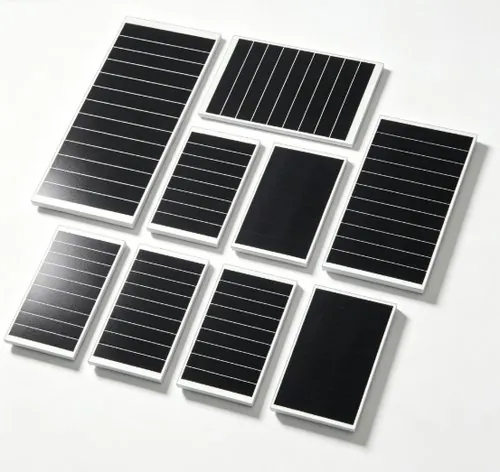
In the realm of micro-electronics and off-grid systems, standard solar solutions are a compromise. When integrating power into compact enclosures, wearable tech, or remote IoT nodes, every millimeter of space and every milliwatt of energy dictates system success. Our custom 5W-50W micro-solar modules are not merely manufactured; they are precision-engineered. By fusing the architectural superiority of SunPower Back Contact (BC) cells with the extreme resilience of ETFE fluoropolymer encapsulation, we deliver a power source that transcends traditional limitations.
Technical Specifications (Customizable Baseline)
Every parameter can be tuned to your exact system architecture.
| Parameter | Specification | Engineering Notes |
|---|---|---|
| Power Range | 5W - 50W | Scales linearly with active area |
| Cell Architecture | SunPower Back Contact (BC) | N-Type Monocrystalline, Rear-Junction |
| Encapsulation | Aerospace-Grade ETFE | UV/Thermal Stable, Self-Cleaning |
| Custom Vmp | 5V / 6V / 9V / 12V+ | Optimized for direct battery/system matching |
| Form Factor | Fully Custom | Laser-cut to exact CAD specifications |
| Weight Profile | ~5g to 90g | Ultra-low mass for weight-critical applications |
| Thermal Tolerance | -40°C to +85°C | Zero delamination across extreme gradients |
| Termination | Custom / Solder Pads | JST, PH2.0, IP67, or integrated diodes |
| Operational Lifespan | > 15 Years | Minimal linear degradation in harsh environments |
The Engineering Advantage
Architectural Superiority: SunPower Back Contact (BC)
Conventional photovoltaics are fundamentally limited by front-side metallization. Busbars and fingers cast shadows, create recombination losses, and act as stress concentrators. Our SunPower BC technology completely reimagines the cell architecture.
Extreme-Environment Shielding: ETFE Fluoropolymer
In micro-power applications, the encapsulant is as critical as the cell. Standard EVA and PET degrade rapidly under UV exposure and thermal shock. We utilize aerospace-grade ETFE (Ethylene Tetrafluoroethylene) to guarantee decades of operational stability.
Bespoke Power Architecture: Precision Customization
Micro-power is not one-size-fits-all. We provide end-to-end electrical and mechanical customization to perfectly integrate with your unique system architecture.
Uncompromising Durability, Delivered
Every layer is engineered to survive the harshest conditions — UV, salt spray, thermal shock, and mechanical stress — while maintaining micro-power precision.
Mission-Critical Applications
Remote IoT & Telemetry
Autonomous environmental sensors, agricultural monitors, and asset trackers demanding 5W-15W of maintenance-free, decade-long power.
Advanced Wearables & Tactical Gear
Smart textiles, biometric monitors, and military field equipment utilizing ultra-light 10W-20W flexible modules.
Precision Consumer Electronics
High-end outdoor gadgets, e-paper displays, and Bluetooth beacons benefiting from 5V/6V direct-charge optimization.
Off-Grid Micro-Storage Systems
Compact 20W-50W charging arrays for 12V LiFePO4 systems in RVs, marine vessels, and autonomous lighting.
Technical FAQ: Engineering Insights & System Integration
To help engineering teams and procurement specialists make informed decisions, we have compiled a deep-dive FAQ addressing the core technical nuances of our 5W-50W SunPower BC ETFE micro-modules.
Q1: Why is Back Contact (BC) technology specifically recommended for micro-power and wearable applications?
In micro-power applications, surface area is strictly limited. Traditional solar cells lose 5% to 10% of their active area to front-side busbars and fingers. BC technology relocates 100% of the metallization to the rear, maximizing the active area ratio. More importantly, front-side metallization acts as a primary initiation point for micro-cracks under mechanical stress. By removing this, BC cells offer intrinsic resistance to bending and thermal cycling, making them structurally superior for flexible wearables and dynamic environments.
Q2: How does ETFE encapsulation compare to standard PET or EVA in extreme environments?
Standard PET laminates typically begin to yellow and degrade in UV transmittance within 2-3 years, permanently reducing power output. EVA, while common in rigid panels, can delaminate under extreme thermal shock. Aerospace-grade ETFE is chemically inert, highly resistant to UV radiation, and can withstand continuous operating temperatures from -40°C to +85°C without delaminating or becoming brittle. Its ultra-low surface energy also provides a dynamic self-cleaning matrix, ensuring long-term irradiance without maintenance.
Q3: We are designing a low-power IoT sensor. Why should we choose a 6V Vmp panel instead of a standard 5V USB panel?
System-level efficiency is critical in low-power IoT. A 5V panel leaves almost no voltage headroom to charge a 3.7V Li-Po battery, especially as the panel heats up and its voltage drops. A 6V Vmp panel provides sufficient voltage overhead to drive a highly efficient LDO (Low Dropout Regulator) or MPPT charge controller. This ensures stable power delivery even in partial shade or high-temperature conditions, preventing system brownouts.
Q4: Can these custom micro-panels be bent or curved during installation?
Yes, but within specific mechanical limits. The ETFE encapsulation and BC cell architecture provide excellent flexibility. We generally recommend a minimum bending radius of 10x the panel thickness to prevent internal cell stress. For highly curved enclosures, we can customize the cell interconnection matrix and use specialized flexible PCBs to ensure zero micro-cracking during assembly.
Q5: How do you handle thermal management for high-density 50W micro-panels?
Micro-panels have a high power-to-surface-area ratio, making heat dissipation critical. BC cells inherently feature a lower temperature coefficient compared to standard PERC cells, meaning they lose less efficiency as they heat up. Furthermore, our custom ETFE lamination process is optimized for thermal conductivity. For 40W-50W modules, we highly recommend mounting them on a thermally conductive substrate (like aluminum or copper-clad PCB) to act as a heat sink, ensuring that peak power is maintained during maximum solar irradiance.
Q6: What is the expected degradation rate over a 15-year lifespan?
Because BC cells eliminate the primary mechanical stress points and ETFE prevents UV-induced encapsulant degradation, our micro-modules exhibit exceptionally low linear degradation. Under standard STC testing, we guarantee less than 2% degradation in the first year, and less than 0.5% annual degradation thereafter. This makes them highly reliable for mission-critical, unattended deployments.
Elevate Your System Architecture
Standard solar panels force your design to adapt to their limitations. Our custom 5W-50W SunPower BC ETFE modules adapt to your vision. Experience the definitive standard in micro-power reliability, efficiency, and integration.
www.geningtech.com | +86 182 2180 6471 | Derek Cheng — Sales Director